Image Gallery and the story of origin
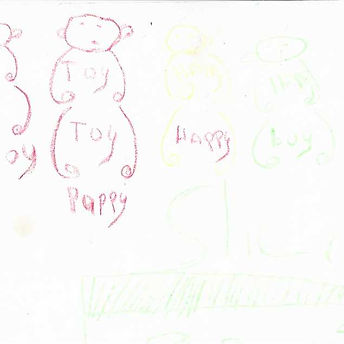
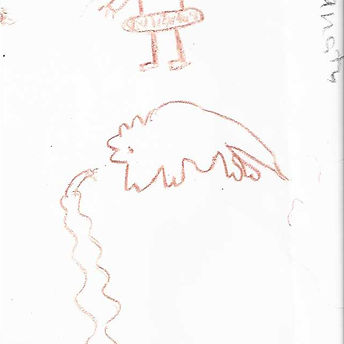
There may be no better way to communicate what we do than through images. A brief overview on some of the workshops in the Gnani alleged witch camp, the Gambaga alleded witch camp, GH we did.
you also will find a view photos of the workshop in Leerdam, NL


The Full Story
Raquel was invited by the founder of Redclay studios, Ibrahim Mahama, to create a show at the exhibition space. As the urgency arised of her research and het founding it became more and more clear she had to work on a long term project.
Gambaga and the Gnani Witch-camp are segregated communities within Gambagatownship in the North-East Region of Ghana Established as a shelter to accommodate alleged witches and wizards who are banished from their communities.
After many interviews she decided to start a drawing workshop. Drawings that will talk about intimate and personal stories. This decision was made after she understood that in many camps speaking about these subjects was a taboo or forbidden it became clear during her workshops the communication had to be through imagery.
The situation in the camps difference per camp.
Many of the inhabitants of the camp did not have a choice , their families or villages did bring them there, or at times the women fleeing their-home situations for fear of being killed. Many inhabitants suffer from mental health issues, which are sadly not well understood in the region and not treated proberly. The loss of agency these women faced, becoming the possession of their respective chiefs compounded by their treatment: often being forced into hard labour working the fields.
Our goals
Addressing the impact of socialisation on women who are victims of witch-hunts requires a multifaceted approach. This includes raising awareness about the harmful consequences of witch hunts, challenging gender-stereotypes and norms, advocating for legal reforms, providing support services for survivors and promoting education to dispel superstitions and misinformation.
It's important to note that the impact of socialisation can vary across cultures and historical contexts and regions. Efforts to combat witch hunts and support the victims must be sensitive to these nuances and tailored to each specific context. One of the main motivations of Raquel vHaver and Ibrahim Mahama is to facilitate a long-term project that due to its scale and timeline could not otherwise be achieved.
The project centres on visual arts aswell as intensive multidisciplinary research that seeks to capture the stories of these incarcerated humans to share with a wider audience. Especially as the witch hunt is fading out the traditional-culture in most parts of the country. Because of this accient knowledge will disappear and witchcraft only can be considered in the future as a fairytale then rather something very present and usable.The idea is to document and preserve their narratives and recenter their voices in a contemporary-history of Ghana.These stories are a hugely important part of the regional culture and heritage and this work seeks to document them visually through art and infrastructure(the building of the glass-factory). This project seeks to tell a more inclusive history giving visibility to the women who are directly affected, thereby highlighting their unique history/position in the region,with a lens to what might be possible for them in the future. Currently the oral-histories give a one-sided portrayal of the accusations, their attack on families and close ones, this project seeks to understand how these women, man and children view their incarceration and the taboo of witchcraft. With the support of local researchers Raquel has unprecedented access to the community in both camps as well as the respective parties involved in their prosecution.
The glass lab
The research will be focussing on materials and the process of making glass and the techniques on ceramics used in the region, Raquel van Haver found an abundance of clay work and ceramics, but surprisingly found an absence of locally made glass despite the access to sand. There are currently no glass factories in Ghana, for larger productions when it comes to stained glass or other techniques, with all glass internationally shipped into the country.
Together with a group of established artists from the region inclusive Redclay the quest to find new techniques will continue. The focus during the research and during the workshops will be all about the experiment of working with the material glass, how to expand beyond the boarders of the knowledge that there already is. How to apply this to the art practices of the artists working in this sector. Professional makers from Leerdam glasblazerij, NL and Murano, IT will come over twice a year to train the artist in these techniques.
Redclay and KNUST specifically requested in the conversation to organise an artist program and workshop to expand the practice of students and artists in the country and beyond. Artist can apply for a residency period and will work for weeks or months in the space. Meanwhile the students of KNUST will be following the program of Redclay and the University.
The artists in residence will have all the freedom to explore the materials and the residents of the camps can work on their specific sculptures telling their personal stories.
The focus on experiment and the connection between the several spaces like the
universities, the workshop in Tamale, Redclay and the international workshops and art spaces will create the perfect flow for knowledge transfer and exploring multiple new and old techniques.
Northern Ghana is located in a very dry environment, close to Burkina Faso. The landscape is dry and you will find a lot of dusty and sandy fields and roads — perfectly set up for a glass workshop. Talking to many artists and with the head of the art University (KNUST) in Kumasi, the professors and older well established artists van Haver understood that the desire to work with glass was very much present, but a lack of resources had prevented this from happening.
Talking with close collaborator and Tamale native, Ibrahim Mahama, van Haver has been been able to gain access to a piece of his land where she has permission to to build the glass workshop as a non profit organisation under the umbrella construction of Redclay. This will be the home of the workspace that is focussing on mastering the arts of glassmaking.
As there will be several spaces an in and outdoor space for different kind of techniques artist and guest can take place in the experiment of making glass. The first 4 years will be focusing on the educational aspect of mastering the craft. Their where a group of professional glassmakers from Leerdam and Venice arriving 4 months a year to Redclay to teach ten selected young local professionals the craft of glass making. Those 10 artist will also help with the production for the opening, Raquel van Haver will show as the celebration of the official opening of the workshop in 2028. This exhibition will be focussing on the stories of the witch camp, local Folklore, archiving, art and the community. This presentation will take place at Redclay. After the opening the space will be running under the control of the management and will be focusing on the collaboration with Blaxtaralines, KNUST, Redclay , FTY and international and local artist for experiment.
The collaboration with the camps.
During van Havers research a bound was formed between the research team the two mentioned alleged witch camps in the northern region. A wish for her and the team was to arrange a program together with Redclay, the workshop and the university that could organise and arrange a safe space for the alleged witches and wizards to travel to. To educate artist, volunteers and people from this group on the craftsmanship of glassmaking and to train them to be professional glassmakers to contribute to their freedom to be independent as a craftsman outside of the camp, As in the first view years it seemed impossible to get the woman and man out of the camp as the are imprissoned, the Gnani alleged witch camp opened up and agreed that the woman can travel freely to Tamale for workshops.
During the training of the 10 artists and a group of alleged woman, man and children who voluntarily will take part , will be taken on board . As the camp leader of the Gnani camp noted ‘ This will be part of their reinterigation into the community again, it a way for them to learn a craft. Many people in the camp never been to school and its very hard for them to find a job and be sustainable to survive outside of the boarders of the camp’ . Meanwhile the team will continue the workshops in the camps. The workshops will contain, drawing classes, clay classes and painting classes. They will focus on the individual stories of the alleged witches and wizards and will archive a part of history that is fading out because of the witch hunt that is going on.
35% of all the income of the profit what the workshop makes will go directly back into the Witch-camps for food, maintenance of the houses, transportation, healthcare and any other needs. The other 65% will go back into the maintenance of the space , new materials, transport and the loan of her workers.
The collaboration between Redclay and van Haver will be an intense and beautiful collaboration that can bring new experiments to Redclay. As many young artists and the University already signed up for classes with glass it will also have a sustainable factor to it that it can bring new jobs to town.
Team
Dedication. Expertise. Passion.
This is our section where we would love to introduce our team, partners and collaborators




Customer Support Lead
-
-

HR Lead
-
-
Let’s Work Together
Get in touch so we can start working together.


